
Five years after the peak years of the COVID-19 pandemic, one of the biggest unanswered medical questions remains: what exactly does long COVID do to the human brain?
In 2026, researchers understand far more than they did during the chaotic early years of the pandemic. While major uncertainties still remain, the scientific conversation has changed dramatically. Long COVID is no longer widely viewed within mainstream medicine as a vague or purely psychological condition. A growing body of research now suggests that, in at least some patients, COVID-19 can leave measurable biological effects on the brain and nervous system long after the original infection has ended.
At the same time, scientists caution that long COVID is likely not one single illness. Instead, the term probably describes several overlapping conditions involving immune dysfunction, inflammation, vascular abnormalities, autonomic nervous system disruption, metabolic changes, and possibly lingering viral material within the body.
The picture emerging from neurology, immunology, and imaging research is complex – but one conclusion appears increasingly difficult to dismiss:
For many patients, the brain is one of the organs most affected.
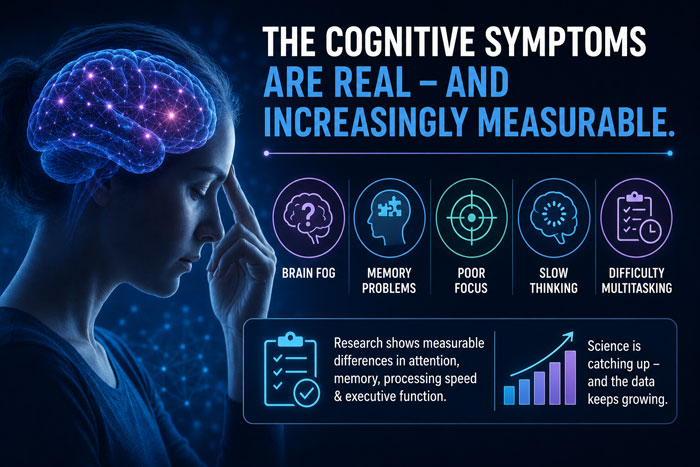
The Cognitive Symptoms Are Real – and Increasingly Measurable
One of the most common long COVID complaints since the beginning of the pandemic has been “brain fog,” a broad term patients use to describe problems involving memory, concentration, mental stamina, and thinking speed.
Patients frequently report:
- difficulty concentrating,
- forgetfulness,
- slowed thinking,
- trouble finding words,
- mental exhaustion after cognitive effort,
- dizziness,
- sleep disruption,
- headaches,
- autonomic symptoms,
- anxiety and depression-like symptoms.
In the early years of the pandemic, some critics questioned whether these symptoms were largely psychological consequences of stress, isolation, or anxiety surrounding COVID itself.
By 2026, however, skepticism toward the biological reality of long COVID has weakened substantially.
Research studies using advanced imaging techniques and biomarker analysis have identified objective abnormalities in subsets of long COVID patients. Researchers have reported findings involving:
- altered functional MRI activity,
- PET imaging abnormalities,
- reduced cerebral blood flow,
- EEG changes,
- inflammatory markers,
- autonomic nervous system dysfunction,
- and subtle structural brain differences.
Importantly, these findings are inconsistent across patients, and no single scan or laboratory test can currently diagnose long COVID. But taken together, the evidence increasingly suggests that the condition involves genuine biological dysfunction rather than being purely psychological in origin.
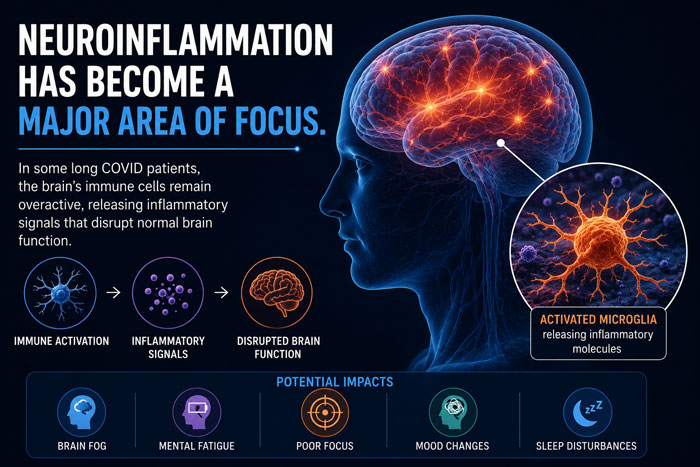
Neuroinflammation Has Become a Major Area of Focus
One of the leading theories in 2026 is that long COVID may involve persistent inflammation affecting the nervous system.
Researchers have observed evidence of activated microglia – the brain’s immune cells – along with elevated inflammatory signaling molecules in some patients. Certain PET imaging studies have also shown patterns that some researchers interpret as potentially consistent with neuroinflammation.
This does not resemble classic viral encephalitis, where a virus aggressively attacks brain tissue. Instead, many scientists now describe long COVID as a lower-grade but persistent inflammatory state that may interfere with normal brain signaling and function.
This theory may help explain why many patients experience fluctuating symptoms that worsen after physical or mental exertion.
It may also explain why some patients appear cognitively functional during brief interactions but experience profound exhaustion or cognitive crashes afterward.
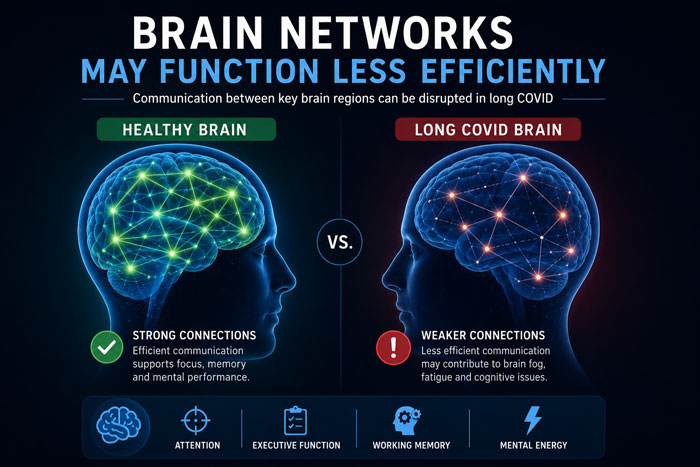
Brain Networks May Function Less Efficiently
Another recurring finding involves altered communication between different brain regions.
Functional MRI studies have suggested that certain brain networks – particularly those involved in attention, executive function, working memory, and cognitive control – may operate less efficiently in some long COVID patients.
In practical terms, this may mean that patients need significantly more mental effort to complete tasks that once felt automatic.
One striking observation in some studies is that abnormalities may become more noticeable during cognitively demanding tasks rather than during resting states. This mirrors what many patients describe in everyday life: routine mental work can sometimes trigger fatigue, headaches, dizziness, or worsening cognitive symptoms afterward.
Researchers are still debating whether these abnormalities reflect inflammation, vascular dysfunction, metabolic stress, autonomic disruption, or a combination of several overlapping processes.
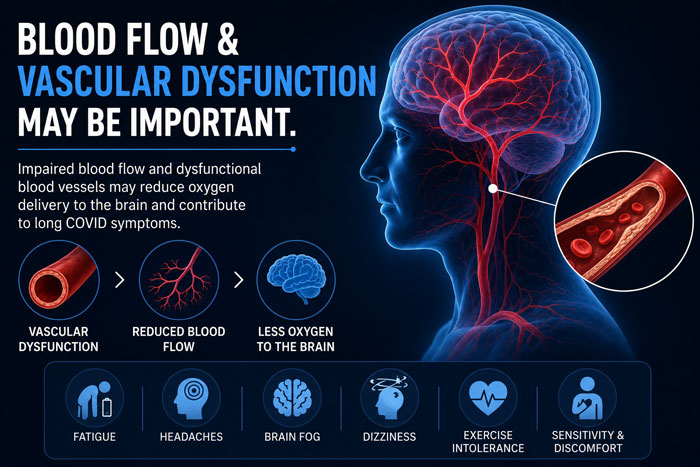
Blood Flow & Vascular Dysfunction May Be Important
Another major area of investigation involves the vascular system.
A growing number of researchers suspect that long COVID may involve abnormalities affecting blood vessel function, oxygen delivery, and blood flow regulation. Studies have explored endothelial dysfunction, autonomic instability, impaired circulation, and the controversial possibility of persistent microclotting in certain patients.
When vascular dysfunction affects the brain, it could potentially contribute to:
- fatigue,
- dizziness,
- headaches,
- exercise intolerance,
- sensory hypersensitivity,
- and cognitive slowing.
Several studies published in 2025 and 2026 reported associations between cognitive symptoms and reduced cerebral blood flow or biomarkers linked to neuronal stress.
This vascular theory may also help explain why long COVID often behaves as a multisystem illness rather than a purely neurological condition. Many patients experience overlapping cardiovascular, respiratory, autonomic, and cognitive symptoms simultaneously.
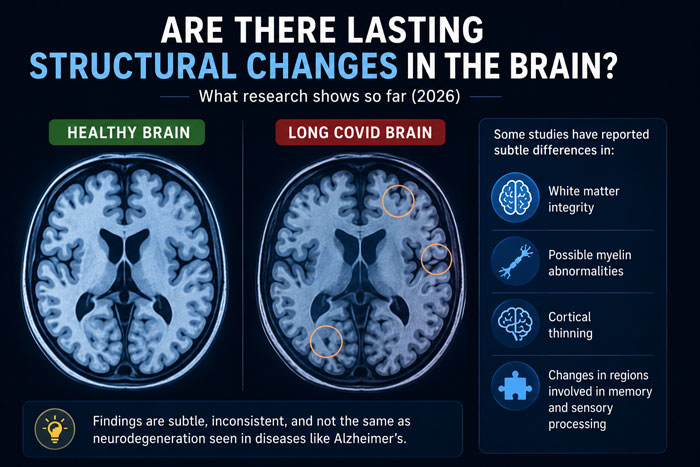
Are There Lasting Structural Changes in the Brain?
One of the most sensitive questions surrounding long COVID has been whether COVID-19 can cause permanent brain damage.
The honest answer in 2026 is that researchers still do not know.
Some studies have identified subtle structural differences in subsets of long COVID patients, including:
- changes in white matter integrity,
- possible myelin abnormalities,
- cortical thinning,
- and alterations involving regions associated with memory and sensory processing.
However, researchers emphasize several important cautions.
First, these findings are often subtle and inconsistent. Second, they do not resemble the severe neurodegeneration typically seen in conditions like Alzheimer’s disease. Third, it remains unclear whether many of these abnormalities are reversible, clinically significant long-term, or even directly caused by the virus itself.
Scientists also caution that long COVID research remains complicated by inconsistent definitions, varying patient populations, and the difficulty of separating direct biological effects from the broader consequences of illness, stress, inactivity, sleep disruption, or preexisting health conditions.
For now, the evidence suggests that COVID can leave detectable biological footprints in the brain in at least some individuals – but the long-term meaning of those changes remains uncertain.
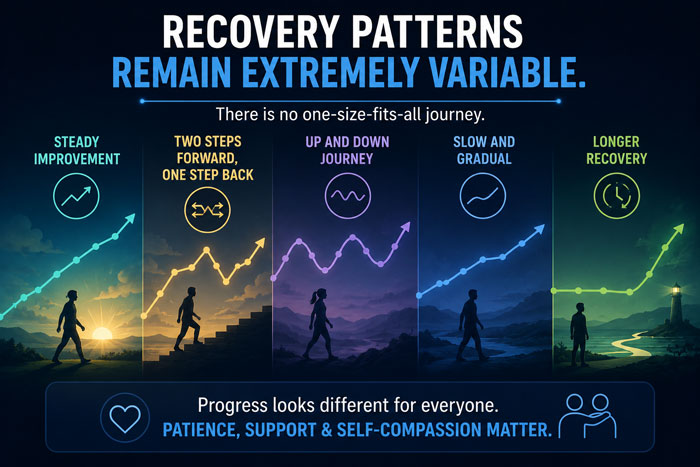
Recovery Patterns Remain Extremely Variable
Perhaps the most frustrating aspect of long COVID is its unpredictability.
Some individuals improve steadily over time. Others recover partially but continue experiencing relapses or fluctuating symptoms. A smaller subset remain significantly impaired years after their initial infection.
This variability has led many researchers to conclude that “long COVID” is likely an umbrella term rather than a single disease process.
Different patients may have different underlying drivers, including:
- immune dysregulation,
- autonomic nervous system dysfunction,
- viral persistence,
- mitochondrial dysfunction,
- vascular injury,
- mast cell activation,
- autoimmunity,
- or metabolic abnormalities.
This may help explain why treatments that appear beneficial for some patients show little effect in others.
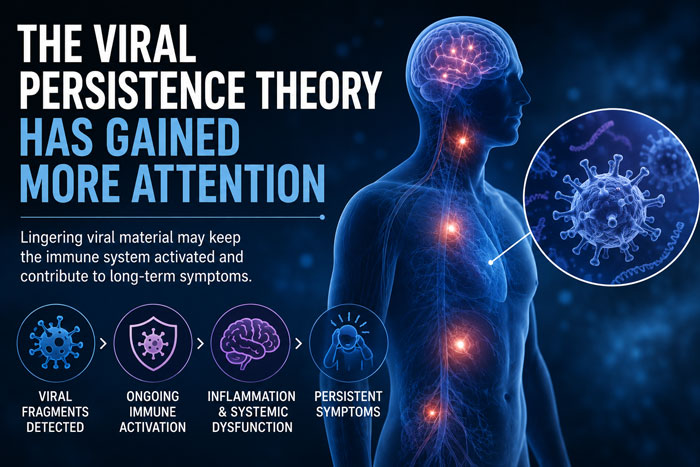
The Viral Persistence Theory Has Gained More Attention
One of the biggest shifts in scientific thinking since 2023 has been the growing seriousness with which researchers now examine the possibility of viral persistence.
Several studies have detected fragments of viral RNA or viral proteins in tissues long after acute infection. In some patients, the immune system appears to behave as though it is continuing to respond to lingering viral material.
Researchers still debate whether live virus remains actively replicating in the body, and direct evidence of viral persistence within the brain itself remains limited.
However, one increasingly influential hypothesis proposes that persistent viral remnants may contribute to chronic immune activation and downstream neurological or systemic dysfunction in at least some patients.
This remains an active area of investigation rather than settled scientific fact.
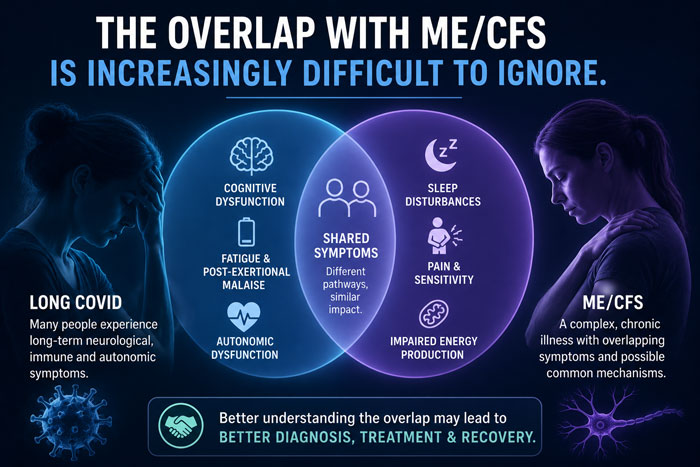
The Overlap With ME/CFS Is Increasingly Difficult to Ignore
Long COVID has also transformed research into other chronic post-viral illnesses – particularly Myalgic Encephalomyelitis/Chronic Fatigue Syndrome (ME/CFS).
A substantial percentage of long COVID patients meet diagnostic criteria for ME/CFS and share symptoms such as:
- post-exertional malaise,
- cognitive fatigue,
- autonomic dysfunction,
- sensory hypersensitivity,
- sleep disruption,
- and impaired energy metabolism.
Researchers now openly discuss the overlap between these conditions, although important differences may also exist.
For many scientists and patient advocates, long COVID has accelerated broader recognition that chronic post-viral illnesses may have been historically under-researched and poorly understood for decades.
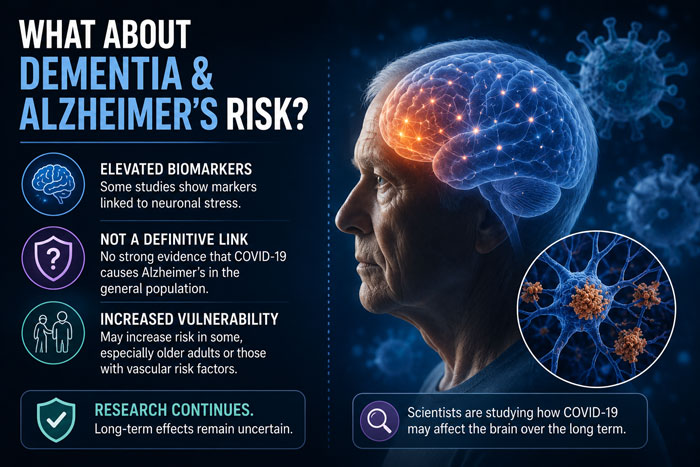
What About Dementia & Alzheimer’s Risk?
This remains one of the most controversial and uncertain areas of long COVID research.
Some studies have identified elevated biomarkers associated with neuronal stress or neurodegeneration in certain patients. These include proteins sometimes linked to Alzheimer’s disease and other neurological conditions.
However, experts strongly caution against overstating the evidence.
As of 2026, there is still no strong evidence that COVID broadly causes Alzheimer’s disease in the general population. A more cautious view has emerged among many neurologists: COVID may increase neurological vulnerability in some individuals, particularly older adults or people with existing vascular risk factors.
Whether this eventually translates into increased dementia risk at the population level remains unknown.
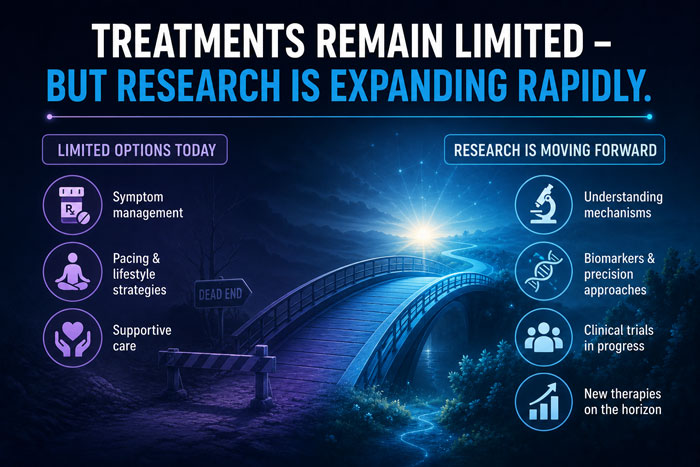
Treatments Remain Limited – But Research Is Expanding Rapidly
Despite enormous research activity worldwide, no universally effective treatment for long COVID yet exists.
However, a wide range of approaches remain under active investigation, including:
- antiviral therapies,
- immune-modulating drugs,
- low-dose naltrexone,
- autonomic rehabilitation,
- anticoagulation strategies,
- metabolic therapies,
- vagus nerve stimulation,
- and various forms of neuromodulation.
Some early studies and clinical trials have shown encouraging signals, but no definitive breakthrough has yet emerged.
For now, treatment remains highly individualized and often focuses on symptom management, pacing strategies, sleep optimization, autonomic support, nutritional support, and carefully tailored rehabilitation approaches.

The Bigger Picture
The scientific understanding of long COVID has changed profoundly since the early years of the pandemic.
In 2020 and 2021, much of the public debate centered on whether persistent symptoms were biologically real at all. By 2026, the conversation has increasingly shifted toward identifying mechanisms, understanding subtypes, and searching for effective treatments.
Researchers now broadly support several important conclusions:
- long COVID can affect the brain in measurable ways,
- inflammation and vascular dysfunction likely play important roles in at least some patients,
- cognitive symptoms may persist for years in certain individuals,
- recovery is possible but highly variable,
- and long COVID likely represents multiple overlapping syndromes rather than one single disorder.
The biggest unanswered questions are no longer whether long COVID exists, but why it affects people so differently, how long the neurological effects can last, and how medicine can eventually learn to treat the condition more effectively.
A Note to Readers
This article is intended for educational purposes. It is not medical advice or a substitute for professional medical evaluation, diagnosis, or treatment.
This article was written by a researcher with bachelor’s and master’s degrees who has personally experienced long COVID and maintains a strong interest in ongoing neurological and post-viral illness research.
Researchers, physicians, neurologists, immunologists, and other medical professionals are encouraged to share additional findings, perspectives, corrections, and emerging research in the comments below as scientific understanding of long COVID continues to evolve.
Those personally experiencing long COVID are likewise encouraged to respectfully share their experiences, challenges, symptoms, and any treatments, lifestyle changes, or coping strategies they have personally found helpful in managing symptoms. Continued discussion and shared experiences may help others navigating similar neurological and post-viral health challenges.
Additional Research & Resources
Major Medical & Public Health Resources
- Long COVID: Lasting effects of COVID-19 – Mayo Clinic
- Long COVID Brain Fog: What It Is and How to Manage It – Yale Medicine
- Long COVID: Brain fog – NHS Inform
- Long COVID Signs and Symptoms – CDC
University & Research Institution Articles
- From Smell Loss to Brain Fog: Unpacking the Long COVID Puzzle – Stanford Medicine
- How COVID-19 leaves its mark on the brain – RACGP
- Long COVID and the brain: Global study links infection to memory loss, higher dementia risk in seniors – UT Health San Antonio
- COVID-19 Leaves Lasting Changes in the Brain, Even After Full Recovery – University of Nebraska Medical Center
- What we now know about long COVID and our brains – University of Melbourne
- Study sheds new light on severe COVID’s long-term brain impacts – CIDRAP
Peer-Reviewed Research & Scientific Literature
- The neurobiology of long COVID
- Acute and long-term effects of COVID-19 on brain and mental health: A narrative review
- Cognitive impact and brain structural changes in long COVID patients: a cross-sectional MRI study two years post infection in a cohort from Argentina
- Altered brain tissue microstructure and neurochemical profiles in long COVID and recovered COVID-19 individuals: A multimodal MRI study
Emerging Research & Ongoing Scientific Discussion
- Scientists Are Getting Closer to Understanding How COVID-19 Triggers Long COVID – BrainFacts.org
- Inflamed Blood Vessels Appear to be Causing Brain Fog in Long COVID – Health Rising
- COVID’s Brain Effects May Linger – Long After Recovery – Psychiatrist.com
- Brain inflammation unlikely to explain long Covid symptoms – Healthcare in Europe
Leave a Reply