
Do you recall your insurance agent asking you whether the house had working smoke detectors and fire alarms back when you were excitedly anticipating the closing date on your brand-new property? These gadgets shield your family and your house against catastrophic damage, which is why they have an impact on your insurance premiums.
Did you know that the mortality rate in houses without functional smoke detectors is more than twice that of households with functional alarm systems? While homes without smoke detectors account for 37% of home fire deaths, households with malfunctioning smoke detectors account for 23% of deaths. Note that only functional smoke detectors contribute to the reduction of fire-related fatalities. Properly working smoke detectors may be one of the most crucial elements which you can contribute toward ensuring your family’s safety.
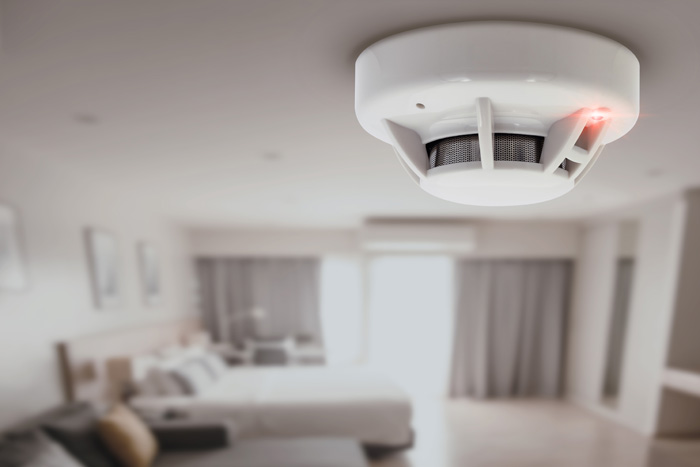
Avoiding Device Failure
Similar to other electrical devices, smoke detectors can malfunction. Smoke detectors can stop working unexpectedly and fail to warn people of a fire under certain situations, such as when the batteries run out of power. Testing and regularly changing the batteries in your home’s fire/smoke/carbon monoxide detectors is the best defense against this kind of failure.
The U.S. Fire Administration (USFA) advises testing smoke detectors every month and replacing their batteries every two years in order to prevent device failure. Many advise developing the routine of changing the batteries in your smoke detectors in the spring and fall, or whenever you adjust your clocks to account for daylight savings time. You might link testing your alarms to turning the page on your calendar if you find that kind of association or trigger useful. Or, just set up notifications in your online Google calendar to remind you when fresh batteries are due as well as when to conduct smoke alarm monthly testing.
Apart from taking preventive measures, keep in mind that your smoke detector can require servicing if it consistently sounds short beeps without any reason or issues false alarms. You should also know that your device and its batteries will run out sooner if you frequently trigger the alarm with smoke from kitchen baking or other cooking “experiments” (anyone been burning toast over a gas stove burner lately?).

Different Smoke Detector Types
Battery-operated and hardwired smoke detectors are the two main categories of smoke detector devices. While the former is undoubtedly the most prevalent, monthly testing is particularly crucial because battery-powered gadgets have the risk of battery failure. Remember that it’s never a good idea to put used batteries into your fire alarm or smoke detector – the risk is simply too great.
Hardwired smoke detectors are wired into the electrical system of your house. Usually, they are still equipped with backup batteries in the event of a power disruption. Be certain to check the functionality of these gadgets once a month by testing them. Furthermore, you would be highly advised to replace the batteries annually even though they are merely meant to serve as a backup.
We’ve so far examined the two types of smoke detectors and the common causes of failure. Next, we’ll examine one additional possible hazard and demonstrate how to test the electronics in your house.
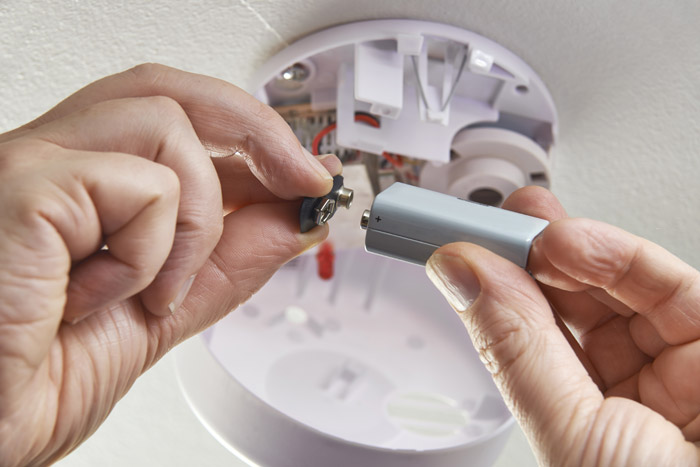
Smoke Detector Irregularities
Even with flawless maintenance, smoke detectors might occasionally still fail to properly alert you in the event of a fire. You might be wondering, why? The most common cause is due to the batteries having been taken out previously or due to the smoke detector being disconnected from the house-wide alarm system.
One of the most annoying 2 AM experiences is to be woken up by a smoke detector chirping; after you’ve wandered aimlessly throughout the house trying to figure out which exact smoke detector in which child’s bedroom is the culprit, all you want to do is to get rid of the chirping so you can quickly go back to bed – and you may be tempted to do “something” to the smoke detector unit to get it to quickly stop its nuisance chirping. The following day you then forget to readdress the problematic smoke detector or to return it back to properly functioning, which means you now have a smoke detector uselessly hanging from the ceiling which will provide no warning if/when that crucial moment of emergency in the future comes.
When a typical smoke detector begins to chirp, this is an indication that the battery is running low and that a fresh battery needs to be inserted. Many people are tempted to just take the batteries out completely, because they find that sound annoying, which can make the device useless. Other may tamper with the unit to prevent it from ever waking them up again at sleepy hours of the night with its annoying chirps. Instead, allow your smoke detector to alert you when it makes that “chirping” sound, which indicates that it needs your attention. Additionally, until you’ve actually taken the time to complete the task it’s requesting of you, don’t disable the chirps. Your life – and the lives of your family and loved ones – may one day depend on it.
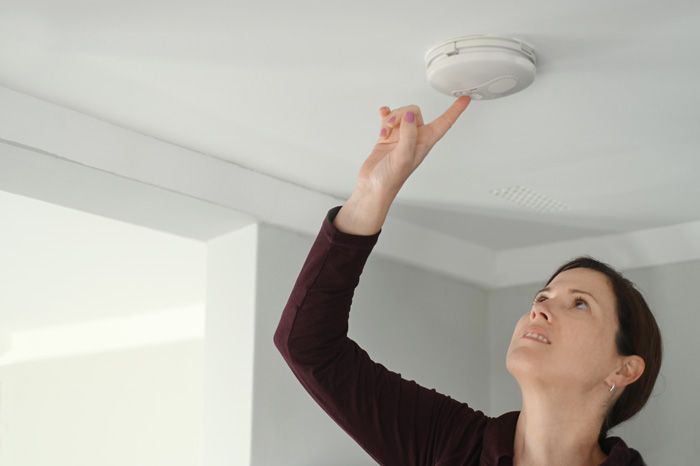
Testing Smoke Detectors
You should be persuaded by now that regularly checking your smoke detectors is crucial, but motivation is useless if you don’t know how to do it! For information on how to test a device of your specific type, start by reading the instruction manual. Nonetheless, the procedures for the majority of devices – battery-powered and hardwired – remain essentially the same if you are unable to find specific information for your devices. To avoid needless fear, first make sure everyone in your home is aware that you will be testing your smoke alarm. Let them know what to anticipate. Next, situate a person in the area of your house that is farthest away from the smoke detector. (You might wish to install an additional detector if they feel the warning is muffled or sounds low to them.)

Just push and hold the test button on your smoke detector after speaking with other family members. The ear-piercing alarm will sound in a few seconds and should play continuously as long as the button is pushed. It is loud and high-pitched. Make sure to change your batteries if you hear no sound at all or if the sound is only very faint. After the batteries have been replaced, retest. In conjunction, make sure nothing is obstructing the smoke detector’s air-intake by carefully inspecting the device’s externals.
Even with routine maintenance, most detectors have a ten-year maximum lifespan, so budget for replacing your units every ten years.
Nicholas Insurance Solutions
As a family owned and operated, independent insurance agency representing over 40 different insurance providers, Nicholas Insurance Solutions can price shop multiple insurance companies to obtain the best quotes and lowest rates for your specific insurance needs. Nicholas Insurance Solutions (nicholasinsurancesolutions.com) is based out of York, Pennsylvania and serves York & Lancaster, PA; northern Maryland; and the surrounding areas. Insurance brokers are licensed in PA, MD, DE, OH, SC, TN and VT. Call to speak with their staff today at (717) 764-2477.
Leave a Reply